Start Surf Fishing the Right Way
Picture this: it’s just past sunrise. The beach is empty except for you. A cool salt breeze rolls in off the water, the surf hisses and crashes in a steady rhythm, and your rod is bent into the horizon like it’s pointing toward something worth chasing. You didn’t need a boat. You didn’t need a guide. Just you, a rod, and the ocean.
That’s surf fishing — one of the most accessible, rewarding, and underrated ways to catch saltwater fish. Whether you’re a freshwater angler making the jump to saltwater for the first time, or a seasoned beach explorer looking to sharpen your skills, this guide covers everything you need to know: from choosing your first setup, reading the beach like a pro, rigging up correctly, and finally putting fish on the sand.
Why I Love Surf Fishing?
For me, the first and most important factor is safety.
Compared to other types of saltwater fishing — like rock fishing, jetty fishing, or boat fishing — surf fishing offers a much better balance of fun and safety, especially when combined with a family trip to the beach.
It’s simple, relaxing, and something you can enjoy without unnecessary risk — while still having the excitement of real fishing.
What Is Surf Fishing — And Why You Should Try It
Surf fishing (also called surf casting or beach fishing) is the practice of fishing from the shoreline, casting into the breaking waves, troughs, and sandbars just offshore. Unlike fishing from a boat, you’re planting your feet in the sand — or wading knee-deep — and using a longer rod and heavier tackle to reach the fish-holding structure beyond the wave break.
The advantages are obvious once you try it. No boat, no ramp, no fuel. Just park, walk to the beach, and fish. The barriers to entry are low: a decent rod-and-reel combo costs less than a day’s boat rental. Yet the fish you can target — redfish, striped bass, pompano, sharks, snook — are anything but small-time.
There’s also something deeply satisfying about how raw surf fishing feels. With no fish finder, no trolling motor, and no way to chase the fish down, success comes entirely from reading the water, understanding tides, and being in the right spot. It puts the skill back in fishing.
Who is surf fishing for? Anyone. If you can cast 50 feet and tie a basic knot, you can surf fish. It’s an ideal starting point for saltwater beginners, a perfect activity for family beach vacations, and a lifelong pursuit for anglers who love the challenge of wild, unscripted water.
Essential Surf Fishing Gear
You don’t need much to get started — but choosing the right gear for your situation makes a real difference. Here’s a breakdown of every piece of equipment you’ll need, from the rods in your hand to the spike in the sand.
Surf Fishing Rods
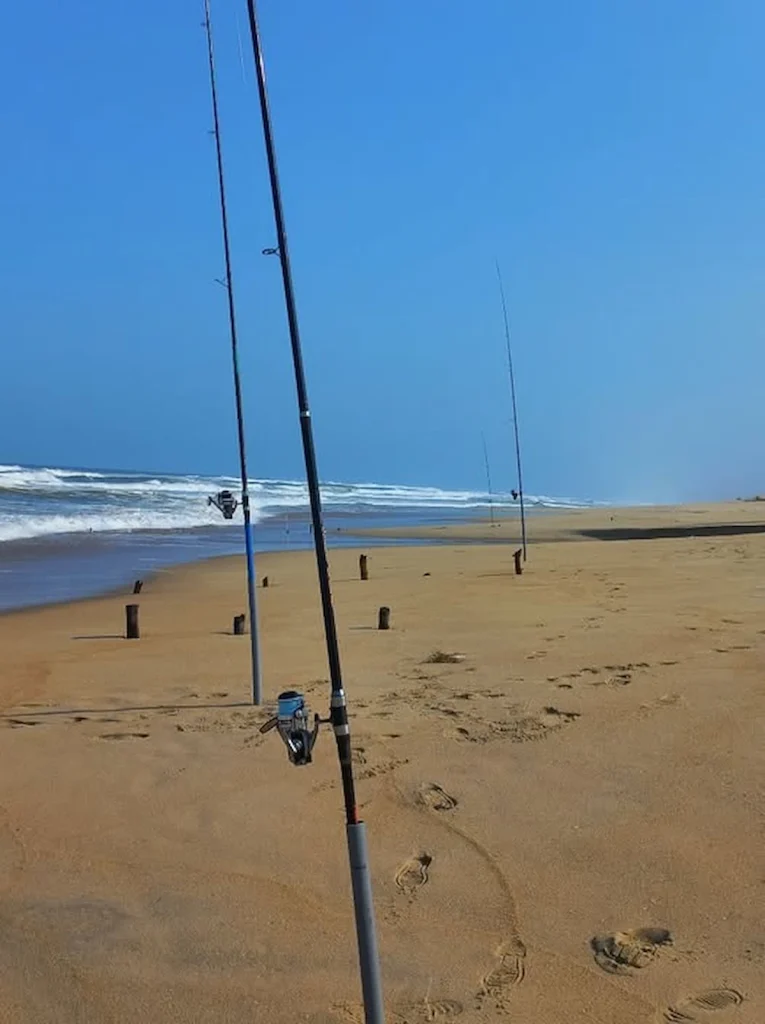
The most noticeable thing about a surf rod is the length. While a typical freshwater rod runs 6–7 feet, surf rods start at 8 feet and commonly run up to 12–15 feet. That extra length serves a specific purpose: getting your bait past the breaking surf, where the fish actually are.
For most beginners, an 8–10 foot medium-heavy rod is the sweet spot. It’s long enough to cast beyond the break, manageable enough to fish with all day, and versatile enough to handle the majority of surf species. If you’re targeting large redfish, striped bass, or sharks, you’ll eventually want to step up to a 12–14 foot rod with heavier backbone.
| Rod Length | Action | Best For | Experience Level |
| 7–9 ft | Medium-Heavy | Pompano, whiting, flounder, speckled trout | Beginner |
| 9–11 ft | Heavy | Redfish, bluefish, striped bass | Intermediate |
| 12–15 ft | Extra Heavy | Large drum, stripers at distance, sharks | Advanced |
Top beginner-friendly brands: Penn, Ugly Stik, Okuma, Shakespeare. You don’t need to spend $200+ on your first surf rod — a $60–80 combo gets the job done while you’re learning.
With years of experience, my advice is to go straight for a 12–15 ft rod, because sooner or later you’ll end up upgrading to this level anyway.
Surf Fishing Reels
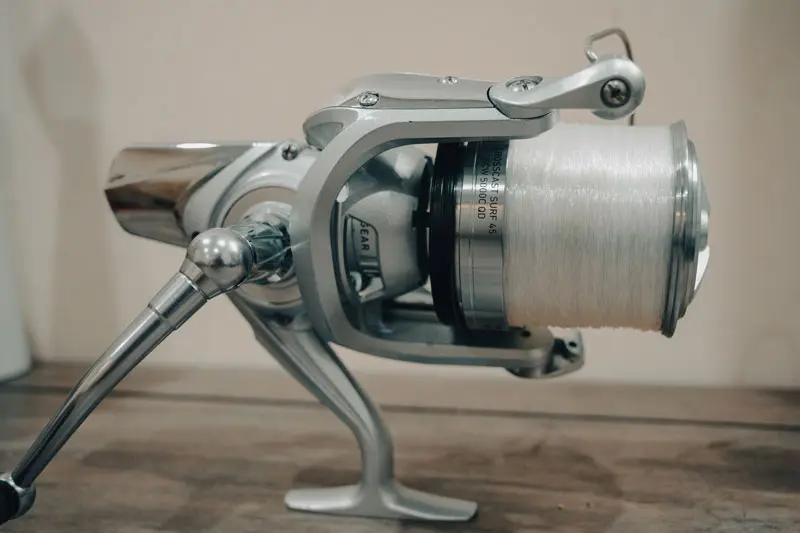
Spinning reels dominate surf fishing because they’re easy to cast, easy to maintain, and handle both braid and mono well. For most surf applications, a size 5000–10000 spinning reel with a high line capacity and corrosion-resistant internals is the standard recommendation.
The saltwater environment is brutal on gear. Every reel you use in the surf should be rated for saltwater use — look for sealed drags, sealed bearings, and aluminum or stainless construction. After every session, rinse your reel with fresh water. This simple habit will double its lifespan.
For most surf anglers, a Penn Spinfisher VI or Battle III, Daiwa BG, or Shimano Saragosa are reliable workhorses at a reasonable price. Conventional reels (like the Penn Squidder) have their place for distance casting and heavy duty applications, but spinning reels are the right starting point.
A shallow spool allows you to cast the line faster and farther.
Fishing Line — Braid vs. Monofilament
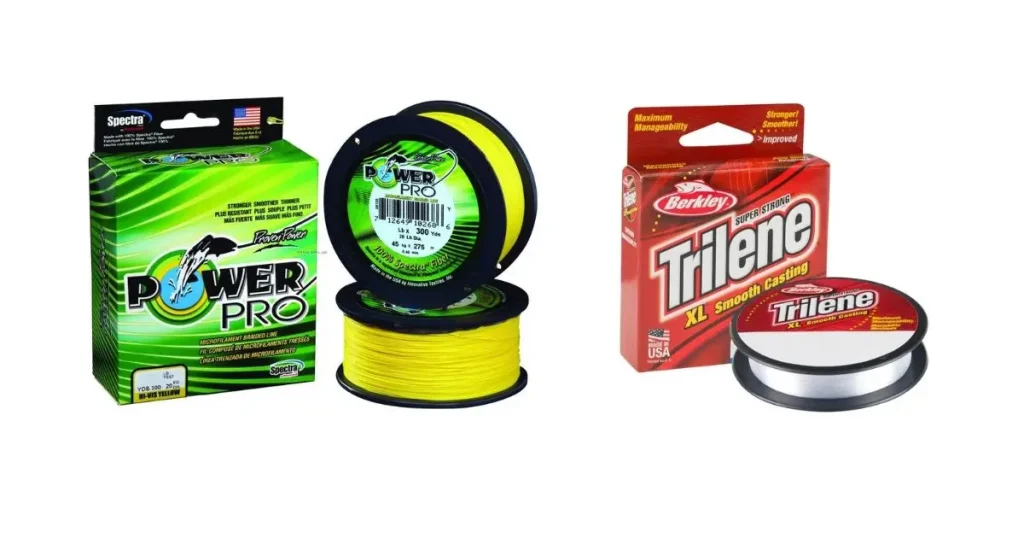
This is one of the most common questions beginners ask, and the answer depends on your goals.
Braided line is the preferred choice for most experienced surf anglers. Its thin diameter means you can pack more line onto the reel, it sinks faster, and it transmits bites much better than mono. A 20–30 lb braid is a solid all-around choice for most surf situations. For big fish like bull redfish or sharks, step up to 40–65 lb braid paired with a heavy fluorocarbon leader.
Monofilament has its advantages too — it’s cheaper, easier to manage for beginners, absorbs shock better, and is more forgiving of casting mistakes. If you’re just starting out and want to keep things simple, there’s nothing wrong with 20–25 lb mono until you get the hang of things.
Regardless of which you choose, always finish with a fluorocarbon leader of 20–40 lb. Fluoro is nearly invisible underwater and handles the abrasion of surf structure far better than your main line.
Sinkers — The Unsung Hero of Surf Fishing
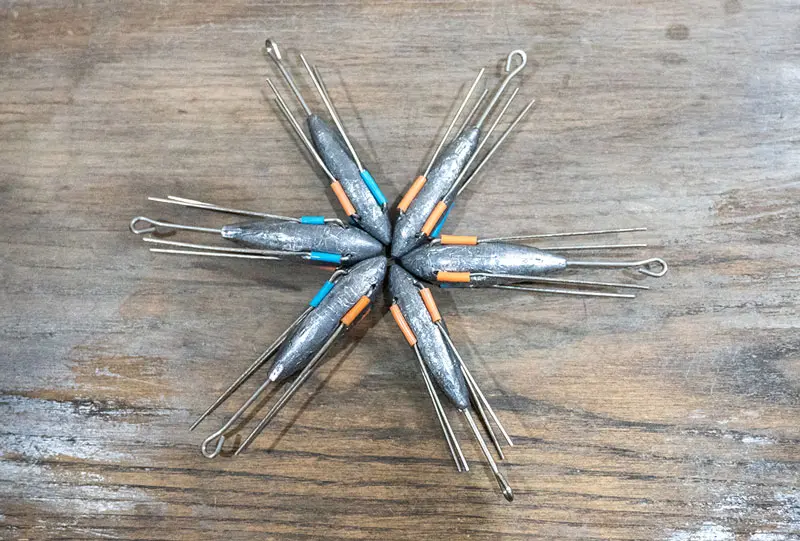
Your sinker is what keeps your bait in the strike zone. In the surf, where currents run strong and waves tug at everything, choosing the right sinker weight and shape matters more than most beginners realize.
- Pyramid sinkers: The surf fishing standard. Four flat sides dig into the sand and hold firm in current. Use 2–5 oz depending on wave intensity.
- Sputnik/spider sinkers: Wire legs anchor even deeper into sand — ideal for heavy surf and fast-moving currents.
- Egg sinkers: Round and smooth, they roll with the current rather than hold. Better for calmer conditions and Carolina rigs.
Keep a variety of sinker weights in your tackle bag. A 3 oz pyramid that holds bottom on a calm day can drag helplessly in a 4-foot surf. Always bring 2 oz, 3 oz, and 4 oz options.
Other Gear Worth Having
The basics above are all you strictly need — but these accessories transform a frustrating beach session into a smooth one:
- Sand spikes (rod holders): PVC or metal stakes that hold your rod upright while you wait for a bite. Buy at least two.
- Bait knife + cutting board: For slicing cut bait cleanly. A sharp fillet knife is better than scissors.
- Needle-nose pliers / hook remover: Essential for removing hooks quickly, especially from toothy species.
- Bucket or cooler: Keep your bait fresh and your catch cold. A 5-gallon bucket doubles as a seat.
- Headlamp: If you fish at dawn, dusk, or night — non-negotiable.
- Polarized sunglasses: Let you see into the water to spot fish, sandbars, and structure. Also protects your eyes from hooks on the backcast.
- Surf cart: Once you’re hooked on surf fishing, a folding cart changes everything. It carries your rods, cooler, sand spikes, and tackle in one trip.
Surf Fishing Rigs — The Complete Breakdown
A rig is the combination of hooks, sinker, swivels, and leader that you tie at the end of your main line. Different rigs perform differently depending on conditions, target species, and bottom type. Here are the four rigs every surf angler should know.
The Fish Finder Rig (Best All-Around Rig for Beginners)
This is the most popular surf rig in North America, and for good reason — it works almost everywhere, for almost every species. The design is elegantly simple: a sliding sinker clip on the main line, a swivel to stop it, then 18–24 inches of leader to a circle hook.
The magic of the fish finder is that the sinker is free-sliding. When a fish picks up your bait and moves with it, it feels no resistance from the weight. It swims away, and the hook sets itself in the corner of the mouth. No missed strikes, no dropped bait.
How to tie it: Thread a pyramid sinker clip (or egg sinker) onto your main line. Tie a barrel swivel below it to act as a stop. To the other end of the swivel, attach 18–24 inches of 20–30 lb fluorocarbon leader. Tie on a 2/0–4/0 circle hook. Bait up and cast.
The Fish Finder Rig is all you need for your first dozen surf fishing trips. Master this one before experimenting with more complex setups.
The High-Low Rig (Two Hooks at Once)
Also called the double-drop or bottom rig, the high-low puts two baited hooks in the water simultaneously — one closer to the bottom, one slightly higher in the water column. This lets you experiment with different baits and depths at the same time, which is great when you’re trying to figure out what the fish want on a given day.
This rig is particularly effective for pompano, whiting, croaker, and other schooling bottom feeders that move in numbers. When they’re feeding, you can double up. It also works well as a teaching rig for kids, since you’re doubling the chances of a bite keeping everyone engaged.
The Pompano Rig
A variation of the high-low specifically refined for pompano fishing — the most sought-after surf species in Florida and along the Gulf Coast. Pompano rigs typically feature two small teardrop-shaped floats above the hooks, which lift the bait off the bottom and add visual attraction. Pre-tied pompano rigs are widely available at beach tackle shops.
Use size 1 or 1/0 circle hooks on a pompano rig — pompano have small mouths and delicate bites. Match with sand fleas or fresh shrimp. When pompano are running, this is the most effective rig on the beach.
How to Read the Surf — Find Fish Before You Cast
This is the skill that separates occasional surf fishermen from anglers who consistently put fish on the beach. Understanding the underwater geography of a beach — even though you can’t see most of it — lets you make every cast count.
The good news: the ocean tells you what’s underneath if you know how to read the surface. Spend five minutes observing any beach and you’ll find the fish-holding structure.
Sandbars and Troughs
A sandbar is a ridge of sand parallel to the shoreline, built up by wave action. Troughs are the deeper channels between the sandbar and the beach. This is where fish feed.
Here’s the ecosystem at work: waves break over the sandbar, tumbling crabs, sand fleas, and baitfish into the trough. Predators — redfish, pompano, stripers — patrol these troughs feeding on the buffet the waves deliver. Your bait, cast to land in a trough, is exactly what those fish expect to find.
How to spot a trough from the beach: look for where waves break twice. The first break is over the outer sandbar. The water calms slightly (the trough), then you’ll see smaller waves as it hits the inner bar near shore. Cast to the calm water between the two break lines.
Cuts and Rip Channels
A cut is a gap in a sandbar where water moves back to sea after waves push it in. These cuts create rip currents — the same hazard that swimmers must avoid. But for surf anglers, cuts are gold.
Baitfish get swept through cuts with the outrushing water. Predators stack at the edges of cuts, facing into the current, ambushing anything that gets funneled through. If you can spot a cut — usually visible as a darker, calmer path through the surf — position yourself nearby and cast across the current. Let your bait swing through the funnel.
Cuts are visible from the beach: look for a gap in the wave-break pattern where the water looks darker and the waves don’t break as strongly. That’s your target.
Points, Jetties, and Structure
Any point where the shoreline changes direction concentrates water movement and, therefore, bait and predators. A rocky jetty or pier creates current lines where the current deflects off the structure. The meeting point of two different currents — called a seam — is a classic ambush point for feeding fish.
Rocky bottoms hold far more life than flat sand. Crabs, mussels, and worms live in the cracks. Baitfish hide along the edges. If your beach has any rockpile or reef nearby, fish it. The transition zone between sand and rock is a consistent fish magnet.
Using Low Tide to Scout
The single best surf fishing lesson is free and requires no tackle: walk your beach at low tide. When the water drops, sandbars emerge, troughs become visible, cuts reveal themselves. You’re essentially seeing the underwater terrain that fish navigate every tide cycle.
Take photos on your phone. When the tide comes back in and the beach looks featureless, you’ll know exactly where to cast. This is how experienced surf anglers consistently outfish beginners on the same stretch of beach.
PRO TIP: Visit your beach at the lowest tide of the week. Walk it, photograph it, and note every sandbar, trough, and cut you see. That mental map will pay off every time you fish there.
Best Time to Surf Fish — Tides, Moon, and More
Timing is not everything in surf fishing, but it’s close. The best gear and technique in the world won’t overcome a dead tide with fish that simply aren’t feeding. Here’s how to stack the timing in your favor.
Tidal Movement: The Most Important Variable
Fish in the surf are most active when the tide is moving — either coming in or going out. Incoming tides push baitfish toward shore and trigger feeding in the troughs. Outgoing tides flush bait through cuts and channels, triggering the same response.
The two hours before and after the turn of the tide (especially high tide) are consistently the most productive windows. Slack tide — when the water barely moves — tends to be slow. Fish rest, predators stop feeding, and the surf feels almost lifeless.
Practical tip: Download a free tide chart app (Tide Alert, My Tide Times, or Tides Near Me) before your trip. Plan to be on the water 1–2 hours before the incoming high. That’s when you want your bait in the water.
Time of Day
Early morning (an hour before and after sunrise) and late evening (around sunset) are consistently the top producing windows. The light is low, water temperatures are more comfortable for fish, and the beach is quieter. Midday surf fishing in summer can be slow as fish move into cooler, deeper water.
Night fishing unlocks a completely different experience. Many larger predators — sharks, big redfish, striped bass — feed aggressively at night when boat traffic has stopped and baitfish move toward the surface. If you’re comfortable on the beach at night, fish a high tide after dark and you might just hook the biggest fish of your life.
Moon Phase and Solunar Tables
New and full moons create the strongest tidal swings — called spring tides. The bigger the tidal movement, the more water flushes through cuts and troughs, and the more aggressively fish tend to feed. Many serious surf anglers plan their best sessions around the days surrounding new and full moons.
Solunar tables, popularized by John Alden Knight in 1936, predict daily peak activity periods for fish based on moon position. Apps like Fish Angler or Fishbrain include solunar data. They’re not foolproof, but combining solunar peaks with strong tide movement gives you the best odds on any given day.
Best Surf Fishing Baits
The most consistent surf anglers follow one principle above all: use what the fish are already eating. That means knowing the local food sources at your beach, in the current season, and matching your bait to that menu.
Natural Baits (The Most Consistent Choice)
Nothing consistently outperforms fresh, natural bait in the surf. Here are the best options:
Sand Crabs (Sand Fleas): The single best surf fishing bait on most North American beaches. Sand crabs are a natural food source for nearly every surf species — pompano, redfish, whiting, croaker, and more. You can catch them free at the water’s edge as waves recede. Look for their V-shaped wake as they dig into wet sand. Thread them onto a small hook through the base of the tail, shell-side up.
Shrimp: The most universally effective bait in saltwater fishing, full stop. Fresh or frozen, live or dead, shrimp catches almost everything. It’s widely available, easy to hook, and stays on in the surf. It’s the right default bait when you don’t know what else to use.
Cut Mullet / Cut Bait: Oily fish like mullet, menhaden, and bunker are irresistible to large predators. Cut into chunks and fished on a fish finder rig, cut bait is the go-to choice for redfish, striped bass, bluefish, and sharks. The blood and oil disperses in the current and draws fish from distance.
Bloodworms and Sand Worms: Deadly for bottom feeders like kingfish, spot, croaker, and surf perch. Available at most bait shops. Handle carefully — they bite.
Squid: Durable, effective, and stays on the hook even in rough surf. Good for bluefish, stripers, and fluke. Cut into strips for smaller species, or use whole for big fish.
Artificial Lures
Lures require more skill and movement than bait fishing, but they have real advantages: you cover more water, you don’t need to store live bait, and the hits are explosive. When fish are actively feeding, nothing matches the excitement of a surface strike or a jarring hit on a fast-moving plug.
Bucktail Jigs: The most versatile surf lure there is. A white or chartreuse bucktail in 1/4 to 1 oz works on striped bass, bluefish, flounder, redfish, and more. Tip it with a strip of squid or a soft plastic paddle tail for extra action. Bounce it along the bottom near troughs and cuts.
Paddle Tail Swimbaits: Soft plastic baits with a paddle or curly tail that swims enticingly. Work them with a slow, steady retrieve or a lift-and-drop along the bottom. Berkley Gulp! Swimmin’ Mullet and Savage Gear Sandeels are proven producers.
Topwater Plugs: Poppers and stick baits like the Yo-Zuri Mag Popper or Stillwater SK65 produce explosive surface strikes from stripers, bluefish, and snook. Fish them at dawn and dusk, or whenever you see baitfish being pushed to the surface.
Metal Spoons and Diamond Jigs: Fast-sinking, far-casting, and deadly for schooling pelagics and bluefish. Cast as far as possible, let it sink, and retrieve quickly. Great for covering distance when fish are spread out.
When using lures, keep moving. Cover 50–100 feet of beach between casts. If you’re not getting hits after 10 casts, relocate to the next trough, cut, or point. Lure fishing rewards the angler who hunts.
Surf Fishing Techniques — Casting, Presenting, and Working the Water
How to Cast a Surf Rod
Distance matters in surf fishing, but accuracy matters more. A perfectly placed cast 40 feet away into the right trough will out-produce a wild 100-foot heave into empty water every time. Here’s how to cast efficiently:
- Face slightly sideways to your target, dominant foot back.
- Hold the rod with two hands, butt resting against your forearm.
- Bring the rod back smoothly behind you — the tip should be pointing behind and slightly down.
- In one fluid motion, sweep the rod forward and upward, releasing the line when the rod reaches about 45 degrees.
- Follow through. Let the weight carry the rig out. Don’t muscle it — let the rod load and unload.
Common beginner mistake: releasing the line too early (sends bait straight up) or too late (sends it into the sand in front of you). Practice timing with an unbaited sinker before you start burning through expensive bait.
One important lesson every experienced surf angler knows: fish are often much closer to shore than you think. Before making a 100-foot cast, try fishing 20–40 feet out, right behind the first breaker. Big redfish and striped bass regularly feed in ankle-deep water. Don’t overlook close water chasing distance.
Bait Fishing Strategy
Bait fishing in the surf is methodical. Cast, set your rod in the sand spike, and watch for the line to tighten or the rod tip to bounce. But it’s not entirely passive.
- Re-cast every 15–20 minutes if you’re getting no action. Fresh scent trail, new position.
- After a wave set, crank in a few feet of line. This repositions your bait and re-activates the scent.
- Fish two rods if regulations allow — one at distance, one close. Double your coverage.
- Circle hooks are the right choice for bait fishing. They self-set, require no hook set, and minimize gut-hooking (important for catch-and-release).
Lure Fishing Strategy
Lure fishing demands more activity. You’re constantly casting, retrieving, and moving. The goal is to find the fish, not wait for them to find you.
- Walk and cast: cover 50–100 feet of beach between casts. Don’t plant yourself in one spot.
- Vary your retrieve speed: fast then slow, pause, erratic action. Match the behavior of fleeing baitfish.
- Fish the edges: cast parallel to the beach rather than straight out. Work the troughs lengthwise — fish patrol them like a highway.
- Watch for surface action: diving birds, baitfish skipping on the surface, or swirling boils indicate feeding fish nearby. Sprint toward that activity.
Target Species — What Can You Catch in the Surf?
One of the best things about surf fishing is the sheer variety of species accessible from the shore. Here’s an overview of the most popular surf fishing targets across North America:
| Species | Region | Best Season | Top Baits | Size Range |
| Red Drum (Redfish) | Gulf Coast, SE Atlantic | Fall (Sept–Nov) | Cut mullet, crab, shrimp | 3–40+ lbs |
| Striped Bass | Northeast, Mid-Atlantic | Spring & Fall | Cut bunker, bucktails, plugs | 2–60+ lbs |
| Pompano | Florida, Gulf Coast | Winter–Spring | Sand fleas, shrimp | 1–3 lbs |
| Bluefish | East Coast | Spring–Fall | Cut bait, spoons, metals | 1–15 lbs |
| Snook | Florida, Gulf | Summer | Live pilchards, plugs | 5–30+ lbs |
| Surf Perch | West Coast | Year-round | Sand crabs, Gulp! sandworm | 0.5–3 lbs |
| Flounder/Halibut | National | Spring–Fall | Bucktail, live minnow | 1–10+ lbs |
| Bull Sharks | Gulf, Southeast | Summer | Large cut bait, whole fish | 50–300+ lbs |
The species you’ll encounter depends entirely on your region, season, and what’s currently migrating through. Before any trip, call the nearest bait-and-tackle shop. They’ll tell you what fish are running, what bait is working, and what size you should be targeting. That five-minute phone call is worth more than any internet research.
Surf Fishing Safety and Beach Etiquette
The ocean is beautiful, powerful, and unforgiving. These safety practices aren’t optional — they’re the baseline that lets you keep fishing for years to come.
Understanding Rip Currents
A rip current is a fast-moving channel of water flowing away from the beach — the same cut you’re fishing into. Never wade deeper than knee-deep unless you’re extremely experienced and conditions are calm. If you get caught in a rip, don’t fight it. Swim parallel to shore until you’re out of the current, then swim in.
Always check surf forecast apps like Surfline or Magic Seaweed before heading out. Any forecast over 5–6 feet of surf or unusual current activity warrants extra caution.
Sun, Heat, and Hydration
Most surf fishing happens in direct sun, often for hours at a time. Wear UPF-rated fishing shirts, apply sunscreen every 90 minutes, and bring more water than you think you need. Heat exhaustion on an open beach can escalate quickly, and the nearest shade may be far away.
Fishing Licenses and Regulations
Nearly every state requires a saltwater fishing license for surf fishing, even from the beach. Regulations also cover size limits, bag limits, and closed seasons for different species. These rules exist to protect fish populations — the same populations you’re counting on to be there next season.
Check your state’s fish and wildlife agency website before every trip. Regulations change seasonally. Fines for non-compliance can be substantial.
Casting Etiquette and Respecting Fellow Anglers
Surf fishing can get crowded, especially at prime spots during peak seasons. A few unwritten rules keep the peace:
- Don’t set up within 50 feet of an angler already fishing, without asking.
- When casting, always look behind you. A heavy surf rig moving at speed can seriously injure someone.
- Keep the beach clean. Pack out everything you pack in. Other surf anglers and beach goers share this space.
- Practice catch and release for oversized or undersized fish, and for species you’re not keeping. Wet your hands before handling, return fish to the water facing the current.
10 Surf Fishing Tips Every Beginner Needs to Know
These are the lessons that typically take anglers a full season to learn. Consider them a shortcut:
- Start simple. One rod, a fish finder rig, and fresh shrimp. Add complexity after you’ve caught fish consistently.
- Fish the tide change. Plan to be fishing the two hours before and after high tide. That’s when most fish feed most aggressively.
- Don’t cast as far as you can — cast to the right spot. Identify a trough or cut first, then cast to it accurately, even if it’s only 40 feet away.
- Move if you’re not getting bites. After 20–30 minutes of nothing, relocate. Fish aren’t evenly distributed along the beach.
- Call the bait shop before you go. Five minutes on the phone will tell you what species are running, what bait is working, and what the conditions are like.
- Keep your bait fresh. Bait left in the sun deteriorates fast. Keep it in a cooler with ice or a wet rag. Fresh bait outfishes old bait every time.
- Rinse your gear after every session. Salt destroys reels and guides. A quick rinse with fresh water extends the life of all your gear dramatically.
- Watch the birds. Diving birds — especially pelicans — reveal where baitfish are concentrated near the surface. Where the bait is, the predators follow.
- Fish close before you fish far. Work the water just behind the first break before launching long casts. Big fish feed surprisingly close to shore.
- Be patient and be present. Surf fishing rewards observation. The angler who watches the water, notices the structure, and understands the tide will consistently outfish the angler who just chucks bait and checks their phone.
Complete Surf Fishing Gear Checklist
Use this checklist before every beach session:
Tackle & Rigging
- Surf rod (8–12 ft depending on conditions)
- Saltwater spinning reel (6000–8000 series)
- Braided line + fluorocarbon leader
- Pyramid sinkers — 2 oz, 3 oz, 4 oz
- Circle hooks — sizes 1/0, 2/0, 4/0
- Pre-tied fish finder rigs and pompano rigs
- Swivels, snap clips, extra leaders
Bait & Lures
- Fresh or frozen shrimp (always works)
- Cut mullet or bunker (for larger species)
- Sand fleas (if targeting pompano)
- Bucktail jig + soft plastic grub
- Metal spoon or popper (for active lure fishing)
Beach Gear
- Sand spikes (at least 2)
- Bait knife + cutting board
- Needle-nose pliers or dehooker
- 5-gallon bucket or cooler with ice
- Headlamp with extra batteries
- Polarized sunglasses
- Sunscreen + UPF shirt
- Plenty of water
- Trash bag (leave no trace)
- State fishing license (on your phone or printed)
Final Thoughts — Your Next Surf Fishing Trip
Surf fishing is one of those rare pursuits that’s simple to start and impossible to master. A beginner with a $70 rod and a bag of shrimp can catch fish on their first trip. An angler with thirty years of experience is still learning something new every time they walk out of the surf.
What makes it special is that it takes place at the edge — the most dynamic, alive, and unpredictable environment on earth. The tide changes everything. The conditions you fished last week mean nothing today. Every session is a new puzzle.
Start simple. Learn the water. Respect the ocean. Rinse your gear. And when you finally feel that first heavy pull on a surf rod — the line cutting sideways through a wave, the drag screaming — you’ll understand why surf anglers keep coming back.
The ocean’s waiting. Go fish it.